Hero Survival IO
- 4.4
- Rating
- 1.00M
- Installs
- Free
- Price

 Analysis by App-foxy
Hero Survival IO is the kind of mobile adventure game I can pick up for a short break and understand almost immediately. Its main appeal is the mix of survival pressure, arcade-style movement, and the familiar “io” feeling of handling a hero in a crowded, dangerous space. I played it as a lightweight action experience rather than as a deep role-playing game, and that distinction matters: the fun comes from reacting quickly, choosing when to take risks, and trying to last longer than the situation seems to allow.
The game is free to download, with optional purchases ranging from $0.99 to $99.99 per item. That wide purchase range makes spending an important part of deciding whether it suits you, even if you never buy anything. I also found it useful to approach the game with a simple rule: enjoy the free progression first, then decide whether any paid option genuinely improves the experience rather than assuming that spending is required.
How the survival adventure feels in everyday play
My first impression was that Hero Survival IO is designed for quick decisions rather than long planning sessions. You guide a hero through danger, deal with threats as they appear, and try to keep control when the screen becomes more demanding. The adventure category is a good fit because the game is built around movement, risk, and getting through hostile situations instead of simply matching tiles or following a quiet story.
You May Also Like

 Blood Strike: 2.5 Anniversary
Blood Strike’s Loadouts Turn Every Drop Into a Tactical Gamble
A close look at Blood Strike’s custom loadouts: how fast access to signature weapons reshapes its battle royale rhythm, rewards preparation, and narrows the gap between fights.

 Pandora - Music & Podcasts
Pandora’s Music Is Easy to Start, but Harder to Recover
Pandora’s strength is its low-effort path from a seed to a station. Its weak spot is how much confidence it asks you to place in connection, setup, and quiet recovery.

 8 Ball Pool
 Is Built on Rivalries, Rematches, and Routine
A close look at the rivalries, rematches, shared routines, and unanswered safety questions that turn a quick pool match into a persistent mobile community.

 Samsung Music
’s Quiet Strength Is Playing What You Already Own
Its reach comes less from spectacle than from dependable access to a personal library. That simplicity is both the app’s strongest retention engine and its ceiling.

 AccuWeather: Weather Radar
AccuWeather Review: A Quick, Clear Forecast for Everyday Decisions
For everyday plans, the best forecast is the one you can understand quickly. AccuWeather makes rain timing, radar, and local conditions easy to act on, with a few trade-offs.

 Hill Climb Racing
Why Hill Climb Racing Still Turns Crashes Into One More Run
A tiny car, a bumpy hill and one more upgrade: Hill Climb Racing keeps resurfacing because its simple chaos makes every near-miss feel personal.
More From Our News Desk



That makes it easy to imagine using it during a commute, while waiting for an appointment, or during a short evening break. I would not choose it when I want a calm game with a carefully written narrative. I would choose it when I want something active that can occupy a few minutes without asking me to remember a complicated plot or learn a large collection of controls.
The traditional io influence gives the experience a direct, accessible rhythm. You are not buried under menus before reaching the action, and the basic objective is easy to grasp. At the same time, the survival format adds more tension than a purely casual arcade round. A careless move can turn a comfortable moment into a scramble, so the game rewards attention even when a session begins casually.
The best way to play is to treat survival as a positioning challenge, not a button-mashing contest. I had better results when I kept space around the hero, watched the direction of incoming danger, and resisted the urge to chase every opportunity. That small change in mindset makes the game feel more deliberate and gives the adventure side more weight.
What makes the loop appealing
The central loop works because it creates a clear short-term question: can I stay safe long enough to improve my situation? That question is more engaging than simply moving forward without consequence. Even when a run does not go well, the failure can point to a specific mistake, such as moving too aggressively or allowing threats to close in from several directions.
I also like that the game can serve different moods. If I only have a moment, I can play reactively and accept a quick attempt. If I have more time, I can focus on making safer choices and seeing how far a more disciplined approach takes me. This flexibility is valuable on a phone, where sessions are often interrupted.
Still, the simplicity has a limit. Players looking for a large world, extensive dialogue, or a highly developed character-building system may find the experience narrow. Hero Survival IO is strongest when judged as a fast survival adventure, not when compared with a full-scale console-style role-playing game.
Progress without turning every decision into a purchase
Because the game is free, I paid close attention to how the idea of spending affects the feeling of progress. The presence of in-app purchases does not automatically make a game unfair, but it does change how I evaluate the pacing. A good free-to-play experience should let a patient player understand the game and improve through practice before reaching for a wallet.
My practical advice is to avoid buying anything during the first few sessions. Use that time to learn how the hero moves, identify which dangers cause most of your failures, and decide whether you actually enjoy repeating the survival loop. If the game is already entertaining without spending, any later purchase becomes a choice rather than a rescue from frustration.
The purchase range is important because a small optional payment and a large bundle represent very different commitments. I would be comfortable treating the lower end as a convenience purchase only after deciding that I planned to keep playing. I would be much more cautious about the upper end, especially without first understanding exactly what it provides and whether it changes the challenge in a way I would enjoy.
That is also where the game may create pressure for some players. Survival games naturally make failure feel personal, and a difficult run can make a shortcut seem tempting. I recommend separating those two feelings: first ask whether the failure came from a learnable mistake, then ask whether a purchase would add lasting enjoyment. If the answer to the second question is unclear, continuing to play for free is the safer choice.
Fairness and the competitive question
The io label can make people wonder whether they are competing directly with other players, but I would not assume that every io-style game offers the same kind of competition. For Hero Survival IO, the safest way to judge fairness is to focus on what you can personally control: movement, timing, awareness, and willingness to learn from failed attempts.
I would not recommend spending with the expectation that it guarantees skill, better decisions, or a satisfying result. A purchase may be useful to someone who values convenience, but convenience and competitive ability are not the same thing. If the appeal for you depends on proving that you can survive through practice, keeping the experience free may actually preserve more of the challenge.
For a fair personal test, play several sessions without buying and compare improvement rather than simply comparing survival time. Notice whether you are reading danger better, taking fewer unnecessary risks, and recovering from mistakes more calmly. Those are stronger signs that the game is rewarding learning than a single unusually successful attempt.
Players who want a strictly competitive environment should be cautious about expectations. A dedicated competitive game usually explains its ranking, matchmaking, or player-versus-player structure clearly. Here, I would approach the io element as a style and pacing influence unless the game itself gives you a reason to expect a formal competitive system. That keeps the experience enjoyable without building an assumption the game may not support.
Who should play, and who should skip it
I think Hero Survival IO is a good match for players who enjoy quick adventure games, survival pressure, and simple controls with room for better decision-making. It is especially suitable for people who like replaying short attempts and gradually becoming more careful. The age label is Everyone 10+, so families can consider it within that rating, while still remembering that individual tolerance for action and repeated failure varies.
I would recommend it to a friend who wants something more active than a puzzle but less demanding than a large role-playing game. It is also a reasonable choice for someone who likes the familiar io format but wants a survival-focused objective instead of an experience built only around immediate arcade competition.
I would skip it if you dislike repetition, become frustrated by restarting, or need a clear story to keep you invested. I would also choose another game if my priority were deep customization, a substantial campaign, or a carefully balanced competitive ladder. Hero Survival IO has a focused identity, and that focus is part of its strength, but it also defines its limits.
How it compares with familiar alternatives
Compared with a traditional arcade game, Hero Survival IO gives failure more context because survival itself is the goal. You are not only chasing a score in a few seconds; you are trying to manage danger over the course of an attempt. Compared with a story-driven adventure, however, it offers less reason to care about characters or a world outside the immediate action.
Compared with a conventional io game, the adventure framing makes the experience feel more goal-oriented. The difference is subtle but useful: instead of relying only on crowd movement or quick reactions, I found myself thinking about safe routes and the cost of taking a risky opening. Players who prefer pure simplicity may see that as extra pressure, while players who want more purpose may appreciate it.
It also sits between casual and demanding games. The controls and premise are approachable, but surviving consistently requires restraint. That combination is why I would not describe it as a completely mindless time-killer. It is easy to start, yet it becomes more rewarding when I stop treating every moment as an invitation to attack or advance.
Device expectations and version context
The current version is 1.8.2, and the game supports devices running Android 7.0 or later. That makes it accessible to people using older Android hardware, although the exact feel will naturally depend on the phone or tablet. On a modest device, I would close unnecessary background apps before playing and keep the screen clean so that movement remains easy to read.
The game was released on February 19, 2023, and its continued presence is reflected in its audience: it has passed one million installs, holds a 4.4 average from around thirty-seven thousand ratings, and has 625 written reviews. Those figures suggest that the concept has reached a substantial group of players, but they should be treated as context rather than proof that every player will enjoy the same pacing or spending model.
Zetylios Legend has kept the project recognizable as a free adventure game built around survival and io-style action. When I evaluate a mobile title like this, I care less about its size than about whether its central loop remains enjoyable after the novelty fades. In this case, the answer depends heavily on how much I enjoy repeating attempts and refining movement.
Questions I would settle before installing
The first question is whether the game is genuinely free to try. Yes, the download price is free, so you can evaluate the core experience without paying at the start. The more important question is whether you can enjoy it without purchases. My answer is that you should be able to make that judgment by playing naturally first, without treating optional spending as part of the tutorial.
The second question is whether it is suitable for younger players. Its content rating is Everyone 10+, which gives a useful age guideline. I would still look at how a particular child responds to action, repeated failure, and purchase prompts, and I would keep device purchase controls in mind whenever a game includes optional items.
The third question is whether it works for short sessions. That is one of its better qualities. The survival structure makes it easy to attempt a round during a spare moment, while the possibility of improving your decisions gives longer sessions a reason to continue. It is less suitable if you need a game that saves a rich story at every stopping point.
The fourth question is whether it is skill-based or purchase-based. I would describe it as a game where practice and positioning should remain central to the experience, but I would not make claims about the exact effect of every purchase without examining each item in context. The responsible approach is to test the free loop, read each purchase description carefully, and avoid assuming that a higher-priced option equals better fun.
The final question is whether the game will stay interesting. I think it can, provided you enjoy self-improvement through repeated survival attempts. If you need frequent narrative surprises or a constantly expanding world, the focused loop may wear thin sooner. That is not a flaw for the intended audience; it is simply the trade-off for a compact mobile format.
My trust verdict after weighing the trade-offs
I come away from Hero Survival IO with a positive but measured recommendation. Its strongest qualities are its approachable survival premise, quick-start adventure action, and ability to make small decisions feel meaningful. I like that a short session can still contain a clear lesson, especially when I focus on spacing and patience instead of rushing toward every opportunity.
The main caution is spending pressure. The game is free to start, but the in-app purchase range reaches from $0.99 to $99.99 per item, so I would not hand it to a child or a less experienced player without sensible purchase protections. For adults, the solution is straightforward: play first, understand the loop, and treat purchases as optional conveniences rather than necessary steps toward enjoyment.
I would recommend it to a friend who wants a compact survival adventure with an io-inspired feel and does not mind repeating attempts. I would not recommend it to someone searching for a deep story, a guaranteed competitive structure, or a purely relaxed experience. My final verdict is that Hero Survival IO is worth trying for free, as long as you judge it by the quality of its play rather than by the promise of what spending might unlock.
FAQs for Hero Survival IO
01What is Hero Survival IO, and how does the gameplay work?
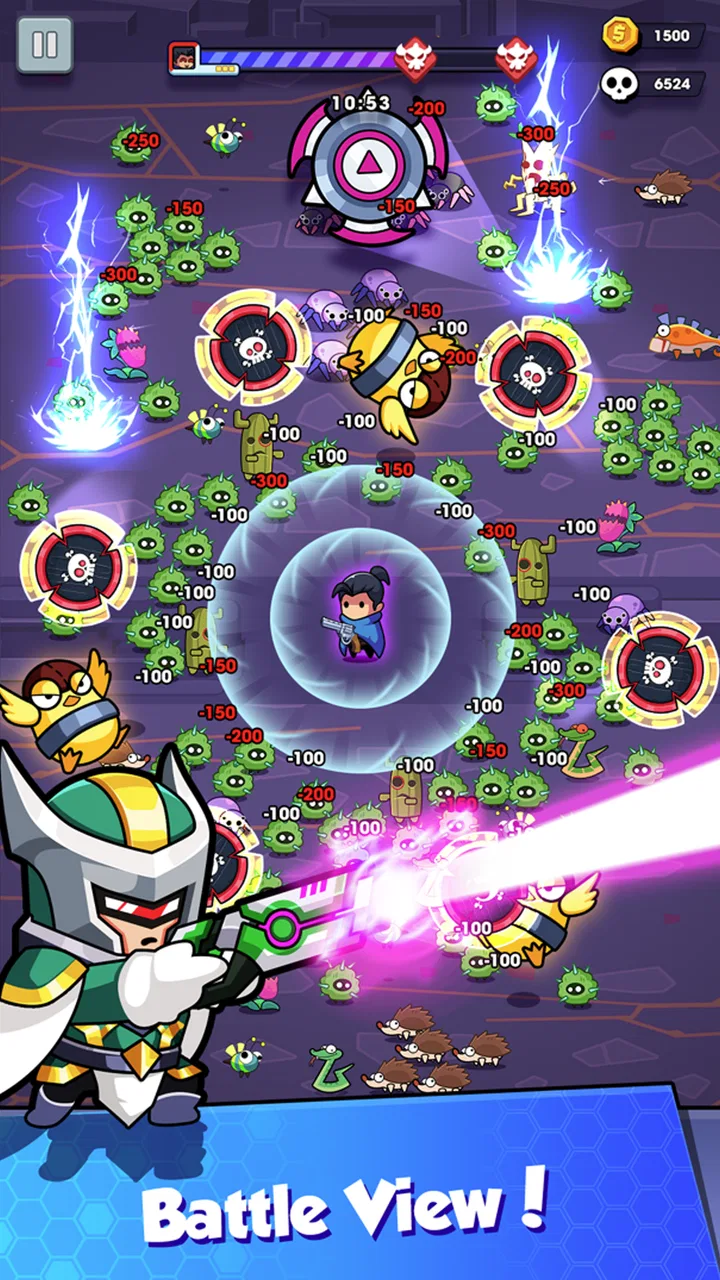
Hero Survival IO is an action-packed survival game in which you control a hero surrounded by continuous waves of enemies. Your main objective is to move around the battlefield, avoid attacks, collect experience, and choose upgrades during each run. The gameplay is designed for short sessions, but later stages become increasingly challenging as enemy numbers, strength, and boss encounters increase.
02Can Hero Survival IO be played offline?
Hero Survival IO may support offline play for its core survival stages, allowing you to enjoy a run without a constant internet connection. However, some features can require online access, including advertisements, cloud-related services, event content, rewards, updates, or in-app purchases. Availability may also depend on the version installed, so it is worth checking the game’s store listing and testing offline access after installation.
03Is Hero Survival IO free to download and does it include in-app purchases?
Hero Survival IO is generally available as a free download, but free access does not necessarily mean that every feature is completely unrestricted. The game may include optional in-app purchases for currency, upgrade materials, character improvements, special bundles, or ad removal. Advertisements can also be used to obtain extra rewards. Purchases are optional, although careful resource management may be important for free-to-play players.
04What devices are compatible with Hero Survival IO?
Compatibility depends on the Android or iOS version required by the current release, as well as your device’s available storage, memory, and graphics performance. Newer phones and tablets should normally provide a smoother experience, while older devices may experience longer loading times, reduced frame rates, or occasional performance issues during crowded battles. Always review the official store requirements before downloading.
05Does Hero Survival IO require an internet connection or account to save progress?
The game’s basic combat may be accessible without an account or permanent internet connection, but progress-saving options can vary by platform and game version. If cloud synchronization, achievements, events, leaderboards, or cross-device progress are supported, signing in or connecting online may be necessary. Before changing devices or deleting the app, confirm how progress is backed up so your upgrades and unlocked heroes are not lost.
Pros
- Quick pick-up-and-play sessions suit short breaks.
- Wide variety of weapons keeps combat from feeling repetitive.
- Enemy waves provide a clear sense of progression.
- Simple controls work well on touchscreen devices.
- Runs smoothly on many mid-range phones.
Cons
- Frequent ads may interrupt the flow between stages.
- Later waves can feel repetitive without major gameplay changes.
- Some upgrades may require considerable grinding.
- Small on-screen enemies can be difficult to distinguish.
- Battery usage may increase during longer play sessions.

Hero Survival IO
Gallery